
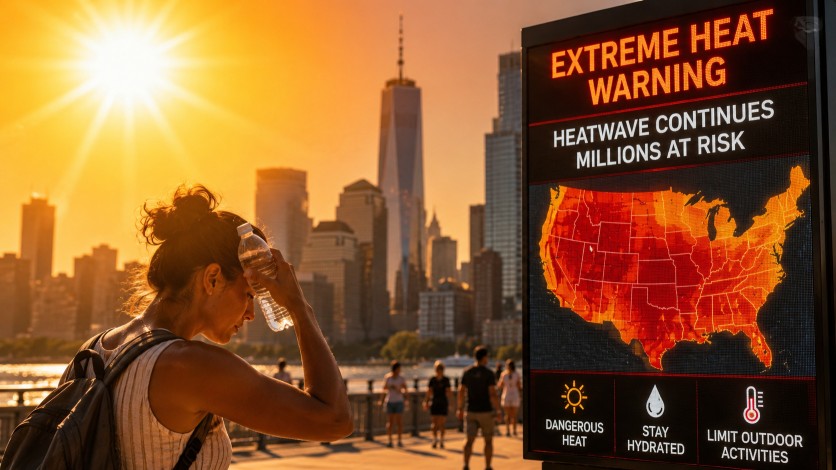
An intense heatwave continues to scorch the central and southern regions of the United States, with more than 40 million people currently under extreme heat warnings. The sweltering conditions are stretching from California all the way to Mississippi, where heat index values are soaring past 100°F (38°C). In some areas of the Southwest, temperatures are predicted to climb to a blistering 120°F (49°C).
The persistent heat is attributed to a weather phenomenon known as a heat dome, which traps hot air over expansive areas and results in prolonged periods of high temperatures. This intense weather system has led to record-breaking temperatures in several locations, including Rapid City, South Dakota, where the mercury reached an unprecedented 112°F (44.4°C). In response to the severe heat, outdoor events in multiple states have been canceled as a safety precaution.
In addition to the scorching temperatures, the region is facing an increased risk of severe thunderstorms, flash flooding, and hail, particularly across the Great Lakes area. Meteorologists anticipate these unstable weather systems will gradually move eastward in the coming days, posing further challenges for residents already grappling with extreme weather.
Health officials are urging the public, especially vulnerable groups such as older adults, children, and those with pre-existing health conditions, to take necessary precautions. Recommendations include staying well-hydrated, avoiding outdoor activities during peak heat hours, and seeking refuge in air-conditioned places or designated cooling centers to mitigate the risks associated with the oppressive heat.
Experts have highlighted that climate change is playing a significant role in the increasing frequency and intensity of extreme heat events across the country. As temperatures continue to climb, the need for adaptive strategies and public awareness becomes ever more critical to safeguard communities from the hazardous impacts of such extreme weather patterns.