
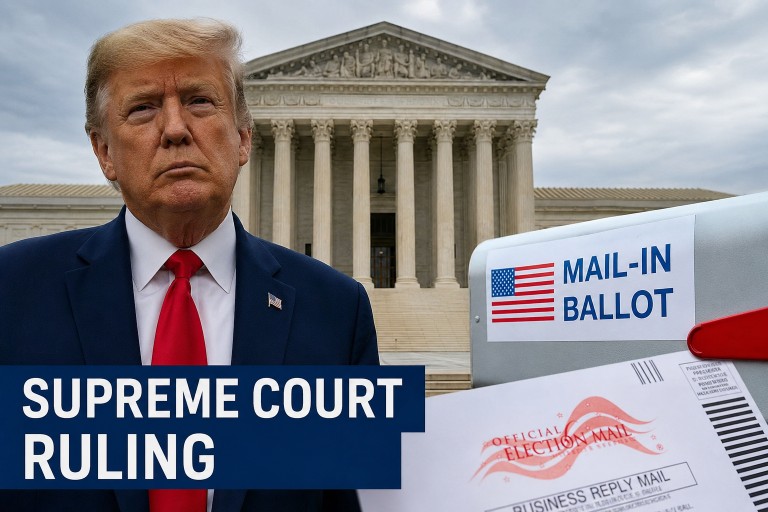
The US Supreme Court has given the Trump administration the green light to proceed with aspects of its executive order concerning mail-in voting. This follows the Court’s decision to lift a lower court’s injunction. By a 6-3 vote, the justices ruled to remove one of the injunctions that had previously halted the order, although a separate injunction that applies nationwide remains active. The Court also noted that this action does not imply future measures taken under the order will necessarily be deemed lawful.
This executive order from former President Trump instructs the federal government to create a list of eligible voters based on citizenship and introduces regulations concerning the distribution of mail-in ballots. It also aims to enforce federal election rules more stringently. Democratic-led states have opposed this order, arguing that the Constitution grants states and Congress the primary authority over how elections are conducted. Critics have expressed concerns that these changes could disrupt preparations for the upcoming November midterm elections and possibly hinder voter access.
The Supreme Court’s decision allows the administration to continue with its policy development while the legal dispute over the executive order unfolds. Opponents fear that implementing such changes so close to the elections could lead to confusion and potential disenfranchisement of voters. They maintain that any significant alterations to the voting process should be approached cautiously and with respect for established procedures.
As legal challenges persist, the nationwide injunction remains a significant barrier to the full implementation of the executive order. The ongoing legal proceedings are expected to further scrutinize the order’s provisions and their alignment with constitutional and electoral principles. Until the broader legal issues are resolved, the extent to which the administration can enforce these new measures remains uncertain.