
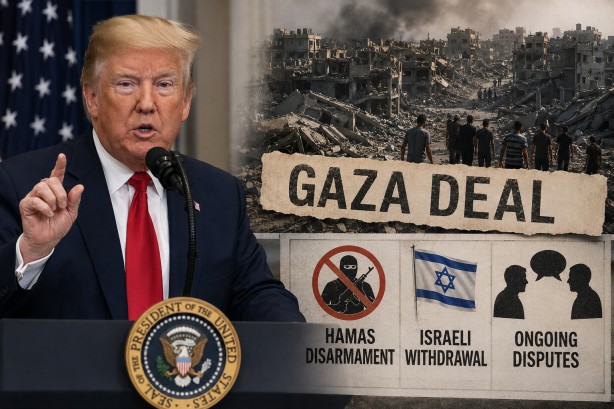
US President Donald Trump has declared a significant breakthrough in efforts to stabilize the Gaza region, announcing a framework agreement aimed at disarming Hamas and withdrawing Israeli forces from the area. The plan, which Trump has described as crucial for establishing a new governance structure in Gaza and securing Israel’s future, seeks to build upon previous ceasefire attempts.
The agreement outlines a series of steps, including Hamas surrendering its arsenal and dismantling its network of tunnels, while Israeli troops stage a withdrawal. Additionally, it proposes the establishment of a technocratic Palestinian government, backed by an international security force, to oversee Gaza’s reconstruction. However, the path to implementation remains fraught with challenges as key disagreements persist.
Hamas has been firm in its stance, stating that it will not commence disarmament until Israel completes its withdrawal, emphasizing the need for both parties to simultaneously meet their obligations. Conversely, Israeli authorities demand the full demilitarization of Gaza before pulling back their forces, reflecting deep-seated mistrust and concerns about Hamas’s commitment to the disarmament process.
Further complicating the situation, Hamas has announced its intention to dissolve its current administration in Gaza, proposing a transition of authority to a UN-supported technical committee. This move is part of the broader initiative to restructure governance in the area. Meanwhile, ongoing discussions with mediators from Egypt, Qatar, and Turkey are anticipated to address the remaining implementation issues.
Despite these diplomatic moves, hostilities on the ground have not ceased. The Israeli military continues its operations and airstrikes in Gaza, with plans to extend its control over more territory. These developments underscore the daunting obstacles confronting any sustainable ceasefire agreement, as both sides grapple with deep-rooted suspicions and the complexity of achieving lasting peace in the region.