
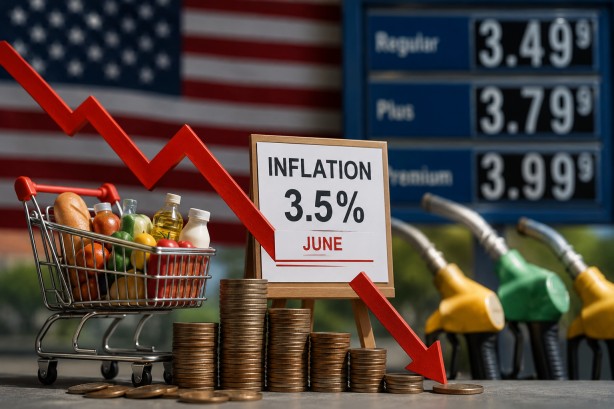
In June, the United States experienced a slowdown in annual inflation, which eased to 3.5%, largely due to a temporary dip in energy prices that helped lower overall consumer costs. The latest Consumer Price Index (CPI) data revealed this moderation following higher inflationary pressures in prior months. Notably, there was a 0.8% decrease in prices compared to May, with significant reductions in gasoline and fuel costs playing a major role in this decline. These decreases were enough to counterbalance the rising costs seen in sectors like food, housing, and utilities.
The core inflation rate, which excludes the more volatile categories of food and energy and is closely watched by the Federal Reserve, decreased to 2.6% year-over-year. This drop in core inflation indicates a slight easing in underlying price pressures. Despite these encouraging signs, the recent relief in inflation may not last, as escalating tensions in the Middle East have led to a surge in global oil prices. This development has already translated into higher fuel costs for consumers and increased operational expenses for industries reliant on transportation and aviation.
The Federal Reserve is poised to evaluate the recent inflation data in conjunction with labor market conditions at its forthcoming policy meeting later this month. Although inflation has shown signs of moderation, it still remains above the central bank’s long-term target of 2%. This persistent gap injects a degree of uncertainty regarding the timing of potential adjustments to interest rates in the future.
As the global oil market remains volatile, the possibility of sustained higher crude prices could exert upward pressure on inflation again, complicating the Fed’s efforts to maintain economic stability. The interplay between oil prices and inflation is a critical factor for policymakers as they weigh their options for future interest rate decisions.