
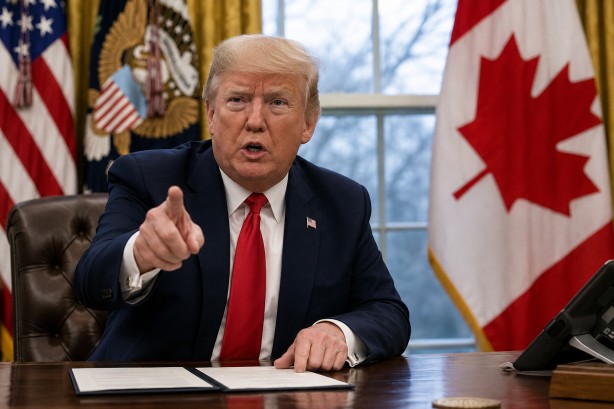
In a significant escalation of trade tensions, US President Donald Trump has launched a fresh verbal attack on Canada following the collapse of trade talks between the two nations. This breakdown has intensified what is being viewed as a burgeoning trade conflict.
The United States has taken a tough stance by imposing hefty tariffs of 50% on approximately $20 billion worth of Canadian imports. Affected goods vary widely, spanning several sectors. In response, Canadian Prime Minister Mark Carney has vowed to challenge these measures with equivalent tariffs, asserting that Canada will not acquiesce to the conditions set forth by Washington.
Prime Minister Carney has labeled the situation a “trade war,” accusing the US of economic aggression against Canada. On the American side, US Trade Representative Jamieson Greer has justified the tariffs, arguing that they are crucial for safeguarding American jobs and preserving vital supply chains.
As this trade dispute unfolds, it has sparked anxiety among businesses and political leaders in both countries. Canadian business circles have expressed concern that this could lead to substantial revenue declines for exporters and small enterprises. Similarly, US lawmakers, especially those representing border states, have voiced fears that these tariffs could drive up costs for businesses, farmers, and consumers alike.
Canada’s retaliatory tariffs are slated to commence on September 8, targeting an array of products including steel, dairy, appliances, and electronics. The ongoing trade tensions have further cast doubt over the future of the US-Mexico-Canada trade agreement, which is a cornerstone of North American trade relations.