
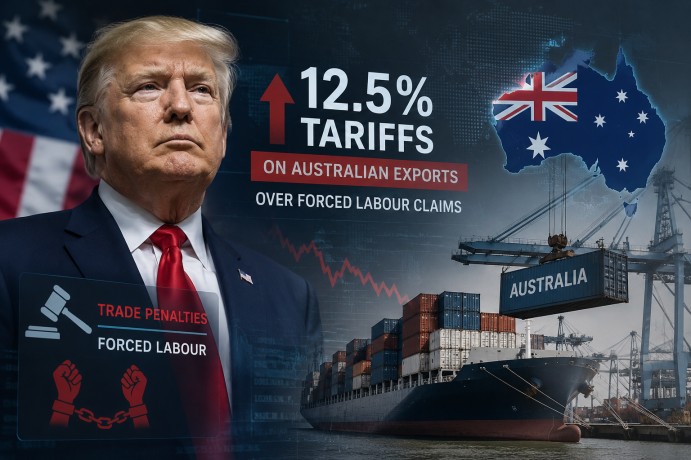
The U.S. has introduced a 12.5% tariff on a variety of Australian exports, driven by worries that Australia might not be taking sufficient steps to stop goods made with forced labor from entering global supply chains. This move has been met with significant pushback from the Australian government, which has condemned the tariffs as unjustified and contrary to the principles of the Australia-U.S. Free Trade Agreement. Trade Minister Don Farrell emphasized that Australia upholds some of the world’s strictest regulations against forced labor and modern slavery, urging the U.S. to rescind the tariffs at once.
This new tariff affects a broad spectrum of Australian exports. However, it notably spares major categories such as beef, gold, certain agricultural products, aircraft parts, and specific mineral and industrial goods. Australian authorities have criticized the U.S. for a lack of evidence to support its decision and warned that this could strain trade relations between the two nations. Business groups and industry representatives have echoed these sentiments, labeling the tariffs as inequitable and detrimental to Australian exporters.
The decision to impose these tariffs comes amidst broader efforts by the Trump administration to enhance trade measures against numerous countries over concerns about the enforcement of forced labor regulations. While the U.S. aims to strengthen its stance on preventing forced labor in global supply chains, Australia maintains that its existing laws are among the most robust worldwide. This disagreement highlights the complexities of balancing trade relations with human rights considerations in international commerce.
Australian officials remain firm in their stance that the tariffs are unwarranted and could have harmful effects on bilateral trade. They argue that the lack of concrete evidence to justify the U.S.’s actions undermines the collaborative spirit of the Australia-U.S. Free Trade Agreement. The tensions over these tariffs underscore the challenges faced by countries in negotiating trade policies that align with both economic interests and ethical standards.