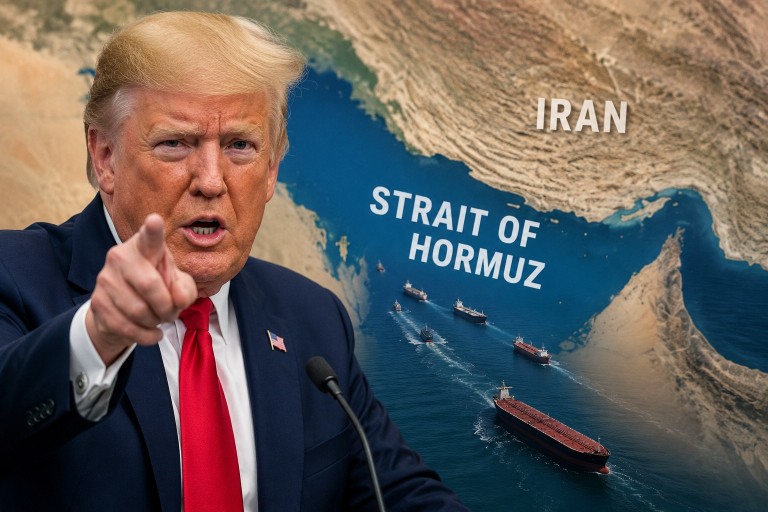
In a bold declaration, US President Donald Trump has signaled intentions to proclaim the Strait of Hormuz as “a territory of the United States.” This comes amid ongoing tensions and unresolved negotiations with Iran. Addressing the media in New York on Friday, Trump suggested that this assertion would follow a US victory over Iran, claiming that the United States already exercises significant control over the vital waterway through an established blockade.
The Strait of Hormuz is crucial for global commerce, serving as a conduit through which about 20% of the world’s seaborne oil supply transits. Geographically positioned between Iran and Oman, the strait has been largely inaccessible since the onset of military actions by the US and Israel against Iran. While Trump’s remarks have stirred controversy, it remains to be seen whether they signal a definitive shift in US policy or are primarily political rhetoric.
Iranian officials have firmly dismissed Trump’s threat. Deputy Foreign Minister Kazem Gharibabadi stated that Tehran would not succumb to US pressure tactics, maintaining that decisions regarding the strait’s status are solely within Iran’s jurisdiction. Meanwhile, Iranian Foreign Minister Abbas Araqchi indicated that Tehran has yet to reopen formal negotiations with the US, despite backchannel communications facilitated by Qatar and Pakistan.
Iran has set specific conditions for the resumption of shipping activities in the strait. These include demands for compensation for war-related damages, the lifting of economic sanctions, and the release of frozen Iranian assets. The conflict has disrupted shipping lanes, leading to increased fuel prices and placing additional financial strain on consumers. President Trump defended these rising costs, arguing that they are a necessary measure to prevent Iran’s acquisition of nuclear weapons.
The ongoing stalemate over the Strait of Hormuz has amplified global anxieties about energy security and the broader economic ramifications of the conflict. As the situation develops, international stakeholders closely monitor the potential impacts on worldwide energy supplies and economic stability.