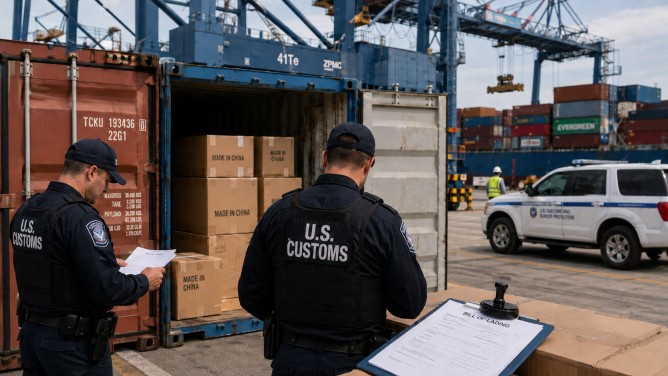
The United States has raised allegations against 38 countries and the European Union, accusing them of being involved in a “shadow transshipment network.” This network is purportedly designed to circumvent high US tariffs on Chinese goods by routing them through intermediary countries. A report, titled “The Great Transshipment Scam,” estimates the potential value of this allegedly illicit activity at approximately $60 billion, claiming it has led to substantial losses in US tariff revenue.
Among the countries and territories implicated in the report are significant trading partners such as India, Canada, and Mexico, along with members of the European Union. Others include Israel, Japan, South Korea, Taiwan, Brazil, and several nations in Southeast Asia like Indonesia, Malaysia, and Vietnam. The list extends further to encompass Turkey, Thailand, Argentina, and more, totaling 38 countries alongside the European Union. The report suggests that these nations are part of a complex network facilitating the entry of Chinese goods into the US under the radar of existing tariffs.
The document claims that around $67 billion worth of goods destined for the US in 2025 might have been rerouted from China through major transit points such as Mexico, India, and Vietnam. This alleged transshipment activity is believed to have resulted in an estimated $28 billion loss in US tariff revenue. The report draws particular attention to the Pune-Gujarat-Chennai corridor in India, indicating that Chinese exports of products like electric pumps and compressors have bolstered local industries there while simultaneously heightening competition pressures on American manufacturers.
In response to these allegations, the US is considering a series of measures aimed at curbing such practices. Proposed actions include implementing more rigorous inspections and interdictions, imposing additional tariffs, and even enacting sanctions. Furthermore, the US may contemplate restricting market access for countries identified as facilitating these tariff evasion activities, as a strategy to safeguard its economic interests and enforce tariff regulations.