
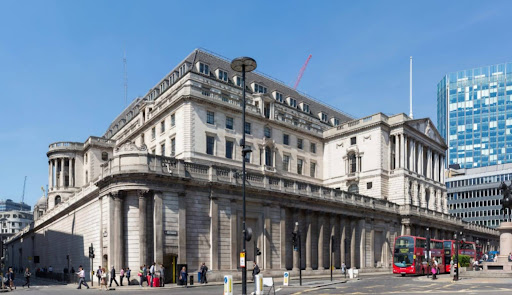
A new uncertainty premium has entered UK financial markets following the Bank of England’s decision to hold rates at 3.75% and warn of potential rate hikes driven by the Iran war’s energy price impact. The monetary policy committee’s unanimous hold on Thursday came alongside hawkish signals that have added a geopolitical uncertainty premium to UK gilt yields, mortgage rates, and borrowing costs across the economy. Officials warned that the conflict could push inflation above 3% and that the direction of UK monetary policy was now genuinely unclear.
Uncertainty premiums represent the additional return that investors demand to compensate for the risk of adverse outcomes that cannot be precisely forecast. In the current context, the uncertainty about the war’s duration and energy market impact, combined with the uncertainty about the Bank’s policy response, has created a premium that is reflected in higher gilt yields, more expensive mortgage rates, and reduced investor confidence. This premium is a real economic cost, borne by borrowers, businesses, and the government through higher financing costs.
Governor Andrew Bailey’s communications on Thursday, while careful to preserve policy flexibility, inevitably added to rather than reduced the uncertainty premium. His acknowledgement of the risks, combined with his reluctance to commit to a specific path, meant that markets were left to price the full range of possible outcomes rather than being anchored to a clear forecast. The resulting premium reflects the genuine policy uncertainty the Bank faces.
Financial markets incorporated the uncertainty premium clearly. UK gilt yields rose, the FTSE 100 fell, and the pound strengthened against the dollar as traders adjusted to a more uncertain and potentially more expensive monetary environment. Analysts noted that the uncertainty premium would persist until there was greater clarity either about the conflict’s direction or about the Bank’s policy response.
For UK borrowers and businesses, the uncertainty premium has immediate practical costs. Fixed mortgage rates that incorporate the premium are higher than they would be in a certain environment. Business borrowing costs are elevated by the same premium. And investment decisions that depend on a clear rate outlook are more difficult to make when that outlook is genuinely uncertain. Reducing the uncertainty premium is therefore an important economic as well as monetary policy goal for the Bank in the months ahead.