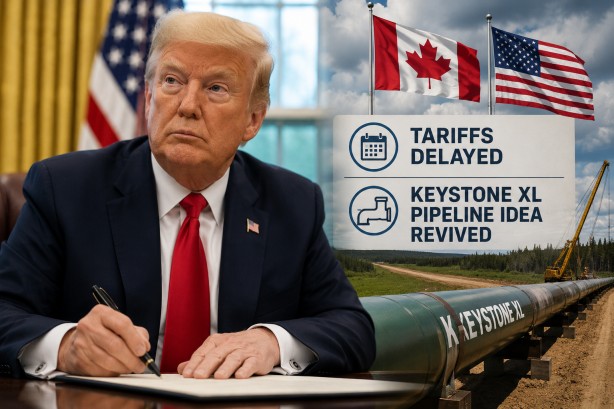
US President Donald Trump has announced a three-day delay on the imposition of a 50% tariff on Canadian goods, citing advancements in negotiations for a new trade agreement between the United States and Canada. While Trump expressed optimism that an agreement was nearing completion, Canadian Prime Minister Mark Carney noted that although significant progress had been achieved, further work remained necessary to finalize the deal. The tariffs, initially set to impact billions of dollars in Canadian exports, including wine and hockey equipment, have been temporarily postponed to allow more time for the two nations to solidify the terms.
In addition to the trade discussions, Trump hinted at a possible revival of the Keystone XL oil pipeline project, suggesting it might be brought back to life. However, he refrained from elaborating on how the pipeline proposal could be intertwined with the ongoing trade negotiations. The Keystone XL project, intended to transport oil from Canada’s western regions to US refineries, was halted when a crucial permit was revoked in 2021. This decision came after years of resistance from environmentalists, landowners, and Indigenous groups.
The backdrop to these developments is a period of tense relations between the US and Canada, characterized by frequent tariff threats and countermeasures. Despite these challenges, the two nations remain key trade partners, with their economies deeply intertwined through the exchange of hundreds of billions of dollars in goods and services each year. The proposed tariffs have sparked concerns among Canadian businesses about the potential for increased costs and diminished access to the US market.
The decision to delay the tariffs provides a temporary respite and an opportunity for both countries to work towards resolving their trade differences. As negotiations continue, businesses and stakeholders on both sides of the border are closely monitoring the situation, hoping for a resolution that will restore stability to one of the world’s most significant trading relationships.