
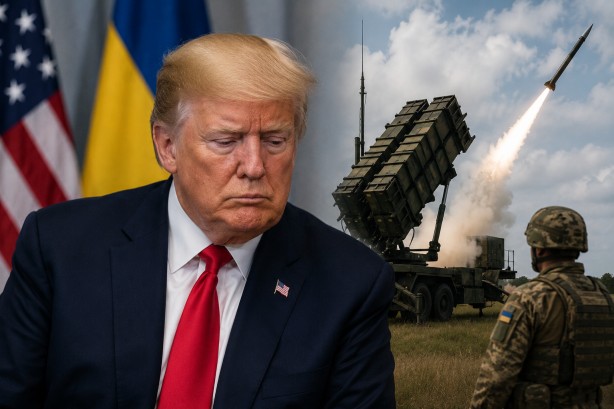
In a recent development, U.S. President Donald Trump has retracted his previous indication that Ukraine might be able to produce Patriot air defense interceptors on its own soil. During a cabinet meeting held at Camp David, Trump clarified that the discussion regarding the transfer of such sophisticated military technology is ongoing, but no definitive approval has been granted. He expressed that sharing the technology for Patriot missiles poses challenges, particularly due to fears that these advanced defense systems could eventually be turned against the United States.
This marks a notable departure from Trump’s earlier statements made after talks with Ukrainian President Volodymyr Zelenskyy, where the local production of Patriot systems was highlighted as a potential collaborative effort. Instead, Trump emphasized that the U.S. will prioritize increasing its own production of Patriot and Tomahawk missile systems. This strategic pivot comes at a time when Ukraine is actively seeking to bolster its air defense capabilities in the face of ongoing military conflicts and worldwide shortages of advanced interceptor missiles.
The shift in U.S. policy is likely to cause unease in Kyiv, as Ukrainian officials have consistently advocated for a greater supply of Patriot systems along with the capability to manufacture them locally. Such capabilities are viewed as crucial for enhancing Ukraine’s air defense strength. The change in stance may therefore affect Ukraine’s plans to strengthen its military defenses amidst persistent regional security challenges.
By focusing on expanding domestic production, the United States aims to reinforce its own defense infrastructure. Meanwhile, Ukraine’s aspirations to independently produce these advanced systems may face hurdles, as the U.S. weighs the strategic implications of transferring sensitive military technology. The outcome of these discussions will be closely monitored, given the broader context of international defense cooperation and geopolitical stability.