
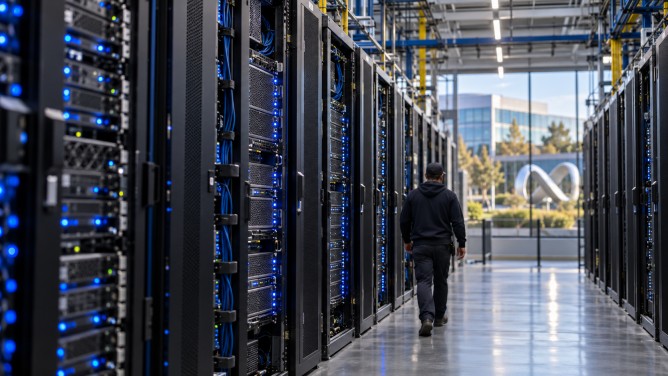
Meta Platforms has unveiled plans to raise $95 billion through stock offerings, signaling its commitment to expanding its artificial intelligence (AI) infrastructure. This substantial fundraising effort will be executed in two phases, aimed at bolstering the development of data centers and computing capacity crucial for AI advancements.
The first phase involves a $35 billion underwritten public stock offering. This offering has already attracted interest from major chipmakers like Nvidia, AMD, and Broadcom, who may collectively invest up to $5 billion. The second phase will see a $60 billion at-the-market offering, allowing Meta to sell shares at prevailing market prices over time. This includes a new class of non-voting Class C shares, ensuring CEO Mark Zuckerberg retains his voting control over the company.
Meta’s announcement arrives amidst growing concerns over the financial stability of smaller AI infrastructure providers, often referred to as neoclouds. These companies, which lease computing power to AI businesses, are facing significant challenges. Notably, Elon Musk, CEO of Tesla and SpaceX, has voiced concerns that over 200 such companies could struggle due to tightening debt markets, potentially resulting in widespread consolidation.
Musk’s comments have intensified scrutiny over the viability of smaller firms, leading to fluctuations in the share prices of several AI infrastructure providers, including Nebius, CoreWeave, and Iren. While some of these companies have managed to recover, investors are increasingly questioning whether the demand for AI computing will rise quickly enough to justify the significant borrowing undertaken by these operators.
CoreWeave, for instance, has accumulated substantial debt in its efforts to expand infrastructure to meet AI developer demands. Analysts suggest that Meta is in a stronger position to finance its AI expansion, thanks to its established revenue streams and access to equity markets. In contrast, smaller providers face greater financial risks if AI demand does not meet expectations.
This scenario highlights a growing divide in the AI industry, where major technology companies continue to invest heavily in infrastructure, while smaller providers face mounting pressure over debt and long-term profitability. Meta’s strategic fundraising efforts underscore its commitment to leading in the AI space, leveraging its financial capabilities to sustain its technological advancements.