
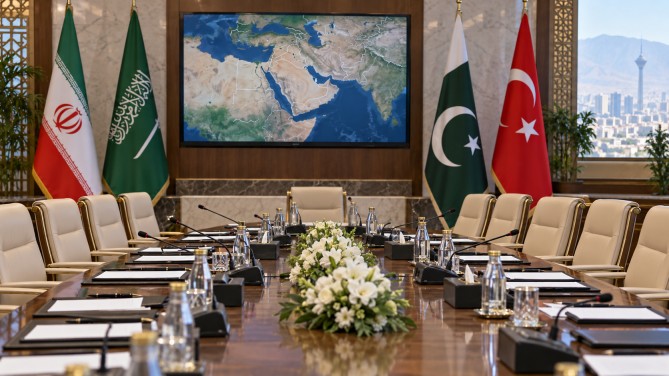
Iran is preparing to host pivotal regional security discussions in Tehran, aiming to address and de-escalate the heightened tensions across the Middle East. The meeting will convene senior officials from Saudi Arabia, Pakistan, and Turkey, alongside Iranian security representatives, to deliberate on strategies for regional stability and diplomatic resolutions to ongoing crises.
The talks will feature prominent figures including Saudi Defence Minister Khalid bin Salman, Pakistan’s army chief General Asim Munir, and Turkish intelligence chief Ibrahim Kalin. These discussions form part of broader diplomatic efforts, which Saudi officials emphasize are crucial for promoting dialogue among nations embroiled in the regional conflict. The initiative also dovetails with mediation efforts led by Qatar and Pakistan.
Regional dynamics remain fraught, with ongoing disputes involving Iran, the United States, and Israel, compounded by security concerns about critical trade routes such as the Strait of Hormuz. This corridor is vital for the global transport of oil and liquefied natural gas, and tensions in the area pose risks to energy security and international commerce.
Further complicating the regional landscape are the hostilities in Yemen, where the Iran-backed Houthi movement continues its offensive against Saudi Arabia. Recent Saudi-led coalition strikes targeted Houthi missile launchers and storage sites, aiming to curtail the group’s military strength. Concurrently, Saudi Arabia has reported intercepting ballistic missiles aimed at Riyadh, while the Houthis claim responsibility for attacks on the Saudi capital’s airport and oil facilities, underscoring the persistent threat to regional security.
In response to these security challenges, Saudi Arabia has bolstered its defenses, with Greece agreeing to maintain its Patriot missile defense system within the kingdom. This collaboration highlights the ongoing efforts to enhance security amid the volatile situation.
The Tehran meeting is anticipated to provide a platform for regional powers to explore avenues for conflict containment, security enhancement, and the prevention of further escalation. However, the success of these talks will hinge on the ability of the participating nations to translate diplomatic engagements into substantial measures addressing the region’s deep-seated disputes.