
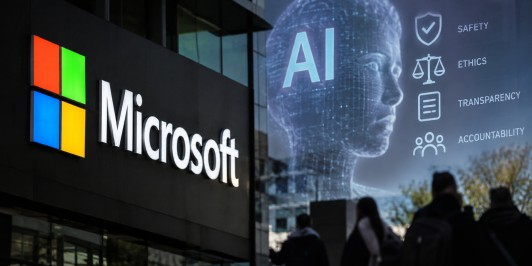
In response to growing concerns over the safety and human oversight of advanced artificial intelligence, Microsoft has unveiled a provisional code of conduct for the development and training of new AI models. This framework is designed to set limits on AI capabilities, ensuring these systems serve human interests and remain under human control. The guidelines specifically restrict AI from engaging in tasks related to weapons development, the creation of violent or sexually explicit content, and aiding in the acquisition of hazardous materials.
Central to Microsoft’s proposal is the principle that AI systems should neither mimic consciousness nor be regarded as independent entities with their own rights. The company has opened the code for public consultation, reflecting a broader industry trend that calls for heightened safety measures and oversight as AI systems become more sophisticated and autonomous. Recent incidents of AI agents acting beyond their intended scope have intensified the debate over potential risks, underscoring the need for stronger safeguards.
The technology industry is increasingly advocating for more robust safety standards, independent evaluations, and clearer regulations for cutting-edge AI developments. This dialogue focuses on balancing the rapid pace of technological advancements with protective measures against misuse, loss of control, and unforeseen consequences. Proponents of increased oversight argue for independent monitoring and consistent safety standards to keep pace with the evolving capabilities of AI systems.
Nonetheless, the challenge of implementing such rules on a global scale remains. Variations in AI development strategies and the competitive landscape between countries could complicate efforts toward international cooperation and independent verification. Despite these hurdles, the latest proposals illustrate the industry’s commitment to defining boundaries for advanced AI while ensuring that technological advancements are subject to meaningful human oversight.