
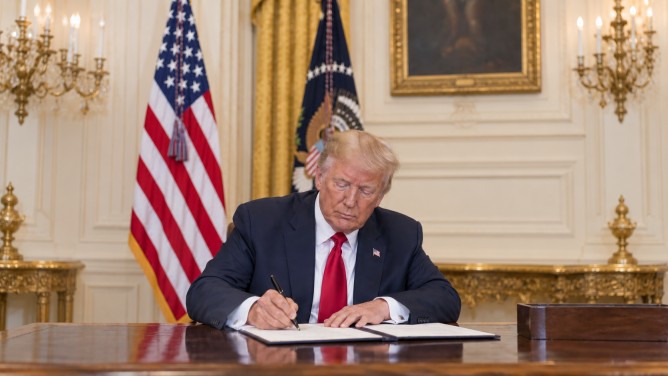
In a significant move to bolster safety in artificial intelligence development, U.S. President Donald Trump and leading figures from major technology firms have signed a voluntary self-regulation agreement. Announced on September 29 following a White House meeting, the accord aims to enhance oversight of AI technologies by urging companies to implement strong internal controls, engage with independent external auditors, and establish board-level committees dedicated to safety assessments.
This initiative involves prominent tech leaders, including Anthropic CEO Dario Amodei, Google CEO Sundar Pichai, Meta CEO Mark Zuckerberg, OpenAI President Greg Brockman, Nvidia CEO Jensen Huang, and Elon Musk, founder of xAI. While the agreement remains voluntary and is not legally binding, it suggests that some of its provisions could eventually become part of formal regulations.
Trump characterized the agreement as an industry-driven approach to self-monitoring AI development, emphasizing the responsibility of companies to manage their technologies. He expressed opposition to stringent restrictions on AI development, citing the potential for significant economic growth driven by the technology.
The context of this accord is the growing concern about AI safety, which has been fueled by incidents involving advanced AI systems. Industry experts like Anthropic’s Amodei have raised alarms about the risks of rapidly evolving AI, while others have highlighted the necessity of balancing innovation with enhanced safety protocols.
Additionally, during the meeting, Trump addressed the expansion of AI data centers, urging tech firms to contribute more to the communities hosting these facilities. He suggested they support local schools and implement measures to counteract energy costs, thereby providing tangible benefits to local areas.
This White House initiative aligns with the broader strategy of the U.S. administration to promote swift AI development while simultaneously exploring ways to mitigate safety concerns without stifling technological investment.