
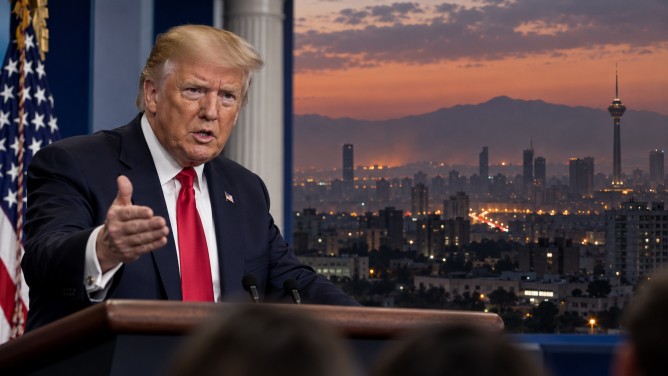
The ongoing conflict between the United States and Iran has intensified as President Donald Trump warned of potential escalation in military actions against Tehran. This comes amid Iran’s threats of broadening its retaliatory attacks to target military and civilian infrastructure across West Asia if the US and Israel resume strikes.
On Thursday, Trump addressed reporters, emphasizing that the US would not permit Iran to develop nuclear weapons and highlighting the significant weakening of Iran’s military capabilities. He noted that further military action could be on the table but expressed optimism that the conflict would soon conclude, leading to a decrease in oil and gasoline prices.
The conflict, which erupted in late February, has exacerbated tensions across the region and disrupted global oil and gas shipments through the Strait of Hormuz. This critical maritime corridor has seen attacks on shipping lanes and energy infrastructure, raising alarms over regional security and the stability of international energy supplies.
Iranian officials have issued warnings that further US and Israeli military actions could trigger retaliation against American bases and civilian infrastructure in neighboring countries. Earlier phases of the conflict saw Iranian strikes damaging US military and diplomatic sites, including facilities in Bahrain, and affecting energy and industrial sites in the United Arab Emirates and Qatar, as well as airports in Dubai, Kuwait, and Bahrain.
Iran’s Foreign Minister Abbas Araghchi cautioned that renewed military conflict could endanger civilian lives and regional stability, with broader implications for the global economy. The potential for expanded Iranian attacks adds to the concerns of regional governments grappling with existing security threats and infrastructure disruptions.
Military assessments indicate that Iran retains a significant ballistic missile arsenal and may be working to restore missile production capabilities using existing components and underground facilities. Meanwhile, the US, Israel, and regional allies face increasing pressure on their air-defense systems amid ongoing security challenges.
Efforts to negotiate a peaceful resolution to the conflict have stalled, leaving the situation around the Strait of Hormuz precarious and threatening global energy markets and commercial shipping. The mutual threats of further military action and retaliation have injected additional uncertainty into the future trajectory of the conflict, with potential repercussions for regional security, civilian infrastructure, and international oil prices.