
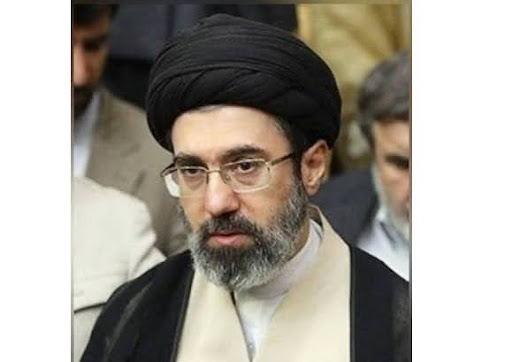
Donald Trump made clear before and after Iran’s leadership announcement that he views Mojtaba Khamenei as an unacceptable figure — and that American pressure on the Islamic Republic will not ease simply because a new face occupies its highest office. Before the appointment was confirmed, Trump had stated that Iran’s next supreme leader would not last long without Washington’s approval. After the Assembly of Experts announced the decision on Sunday, Trump’s response was a cautious “We’ll see what happens” — a phrase that conveyed threat without commitment.
Mojtaba Khamenei, 56, was confirmed through what the Assembly described as a decisive vote, following the February 28 assassination of his father, Ayatollah Ali Khamenei, in a joint US-Israeli airstrike. The new leader is a conservative cleric who spent his career in the informal power structures of the regime, building alliances with IRGC commanders and hardline clergy. He has no experience in formal governance and enters the role at a moment of extraordinary national and regional stress.
Iran’s domestic institutions rallied with impressive speed. The IRGC, armed forces, parliament, and security officials all endorsed Mojtaba within hours. Ali Larijani praised his suitability for leadership during what he described as sensitive conditions. The Houthi rebels in Yemen celebrated and called the appointment a blow against Iran’s enemies. Missiles inscribed with Mojtaba’s name were featured in state media, underscoring the military’s alignment with the new supreme leader.
Trump also told Israeli media that Iran had been poised to destroy Israel and that he and Prime Minister Netanyahu had jointly prevented it. He described the conflict as a collaborative achievement, noting that decisions about ending the war would be made mutually between himself and Netanyahu. These remarks reinforced the message that Washington sees the conflict as far from resolved and that the appointment of a new Iranian supreme leader has not changed the strategic calculus.
Mojtaba Khamenei enters his leadership knowing that Washington’s most powerful figure has effectively set a hostile baseline for their relationship before it has even begun. Proving himself under American pressure, Israeli military operations, Gulf-state conflict, and domestic legitimacy questions simultaneously is an almost impossibly demanding first assignment. Whether he can meet the challenge — or whether Trump’s warning proves prophetic — will define the opening chapter of his rule.