
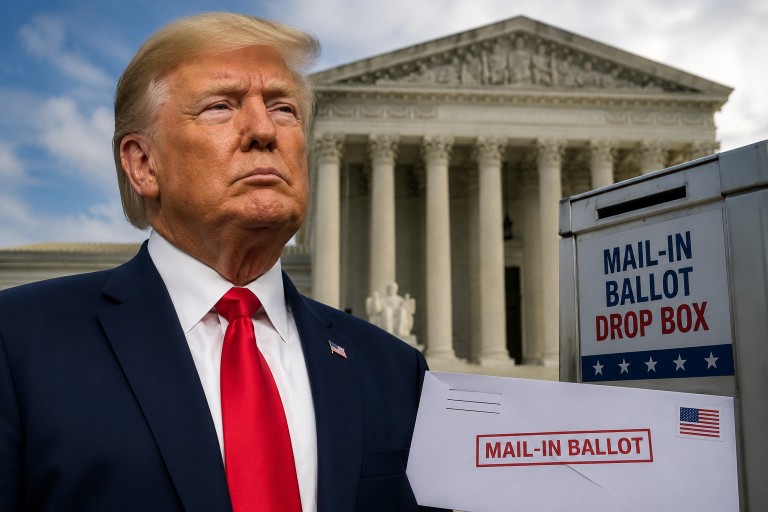
The US Supreme Court has temporarily allowed the Trump administration to advance certain aspects of its plan to impose stricter regulations on mail-in voting in anticipation of the November 2026 midterm elections. By a 6-3 vote, the court’s conservative justices lifted an injunction that had previously halted President Donald Trump’s executive order. Despite this, another injunction is still in place, which means the administration’s full implementation of the order remains in legal limbo due to ongoing challenges.
Initially issued in March, the executive order mandates the federal government to compile a list of eligible voters based on citizenship and restricts mail-in ballots to individuals included on that list. Additionally, it demands increased federal oversight of state and local election officials concerning voter eligibility. Democratic representatives from 23 states and Washington, DC, opposed the order, asserting that the Constitution delegates the authority over election administration to states and Congress. They cautioned that instituting significant changes so close to the election could lead to disruptions in preparations, potentially disenfranchising eligible voters.
A judge in Massachusetts first blocked the order, determining that the president lacked the authority to dictate state administration of federal elections. An appeals court upheld this decision, and a subsequent nationwide injunction was also enacted. Although the Supreme Court’s decision lifts one injunction, it does not imply that all measures taken by the administration to enforce the order will stand up to legal scrutiny. The resolution of ongoing legal challenges will likely determine the extent to which the policy can be implemented.
The Supreme Court’s decision has faced strong opposition from Democratic leaders and voting-rights advocates, who contend that the proposed measures could create confusion and hinder eligible voters’ ability to cast their ballots. States like California are gearing up for additional legal battles in response to the ruling. As the November midterm elections approach, with control of the US House of Representatives and Senate at stake, mail-in voting remains a crucial component of the electoral process. In the 2024 presidential election, about 30% of ballots were submitted by mail.
President Trump has frequently expressed skepticism regarding the security of mail-in voting and has advocated for broader reforms to election procedures as part of his administration’s policy agenda. The current legal confrontations arise with less than 100 days remaining before voters head to the polls, adding complexity to the already contentious issue of election integrity and administration.