
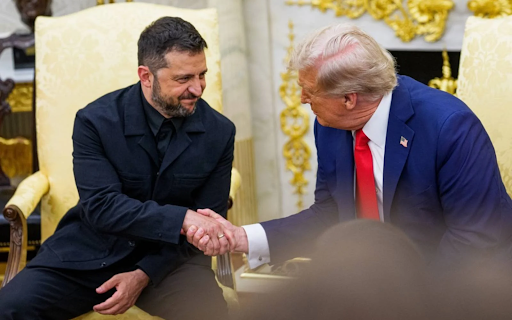
Even if a summit between Vladimir Putin and Volodymyr Zelenskyy is arranged, and even if a framework for a deal is found, the final and highest obstacle remains: the profound lack of trust between two warring nations. No agreement can hold without a minimal level of confidence that the other side will honor it.
The current conflict has shattered any pre-existing trust between Kyiv and Moscow. Ukraine views Russia as a violator of international law and its sovereign commitments, while Russia views Ukraine’s leadership as hostile and controlled by Western interests. This deep-seated animosity makes credible commitments incredibly difficult to achieve.
This is why the role of third-party guarantors, such as the United States, is absolutely critical. An agreement is more likely to hold if it is overseen and enforced by powerful neutral actors. The discussions around security guarantees and U.S. air support are not just about future defense; they are about building a verification and enforcement mechanism to substitute for the missing trust.
Ultimately, the long-term success of any peace deal will not depend on the signatures on a paper, but on the slow, arduous process of building new channels of communication and verification. The planned summit may be the first step, but overcoming the final obstacle of deep-seated mistrust will be the work of a generation.